
Stick War: Saga
Max Games StudiosStrategy
4.72.00K Reviews
- Version
- 2026.5.6222
- Installs
- 10.00M
- Age Rating
- Everyone 10+
Screenshots
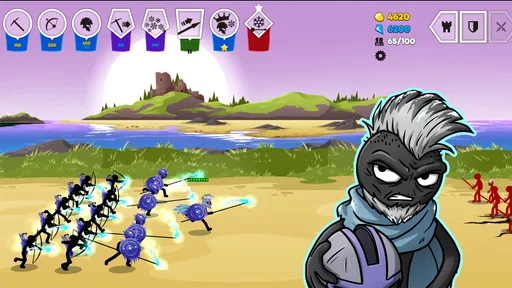
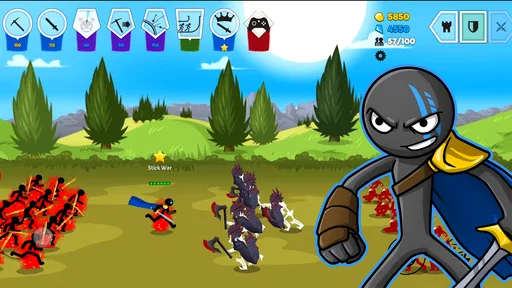
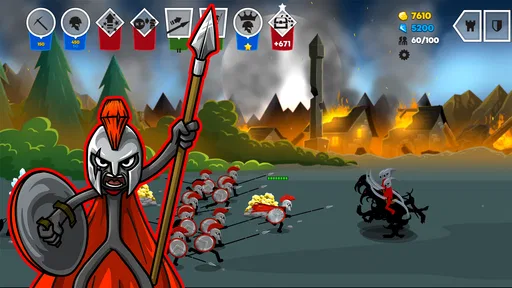
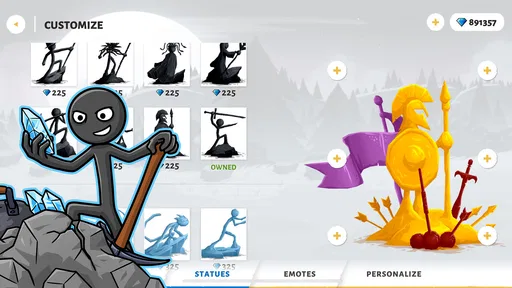
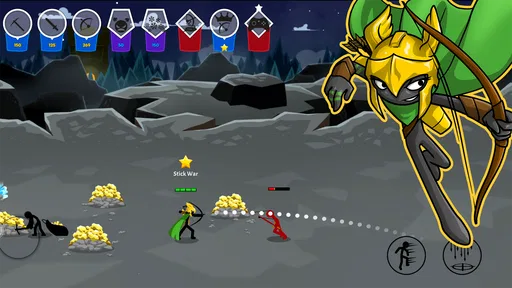
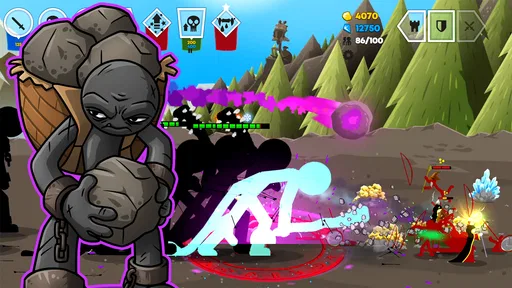
Our Review of Stick War: Saga
 Analysis by Appyee
I spent time with Stick War: Saga as a mobile strategy game, paying attention not only to its battles but also to how comfortably different people can read, control, and follow what is happening. Its basic idea is easy to understand: armies meet in real time, decisions have to be made quickly, and the player tries to turn a small tactical advantage into a winning push. That makes it immediately approachable, but the pace also creates some accessibility challenges once the screen becomes crowded.
Developed by Max Games Studios, the game is free to download and aimed at players aged Everyone 10+. It has built a large audience, with an average rating of 4.7 from around 116 thousand ratings and more than 10 million installs. Those figures suggest that the formula has broad appeal, but they do not remove the need to ask a more practical question: does it work well for the way you see, hear, move, and play?
How clearly the battlefield communicates what matters
I focus here on how the battlefield signals danger and opportunity, because that visual reading is what turns a fast match from a blur into a series of manageable decisions. I’ll also look at how a player can build a reliable scan of the action without trying to track every unit at once.
Readable ideas, busy moments
The strongest part of the presentation is its visual simplicity. The stick-figure art gives units a recognizable shape without trying to imitate a detailed battlefield. I could usually tell where the main groups were, which side they belonged to, and whether an attack was developing. That helps beginners understand the action faster than a more realistic strategy game might.
There is still a difference between recognizing the general situation and reading every important detail. When several units overlap, the battlefield can become visually dense. A player who needs larger targets, more time to inspect the screen, or strong separation between objects may find the most dramatic moments tiring. The clean cartoon style reduces clutter, but it does not eliminate it.
I found it useful to watch the wider shape of the fight before reacting to individual figures. Looking only at one unit can make a player miss a threat developing elsewhere. This is a valuable habit for anyone who finds rapid visual scanning difficult: first identify where the pressure is coming from, then decide which action deserves attention. Trying to track every character at once is both stressful and strategically inefficient.
Navigation that rewards learning by repetition
The game is easier to navigate after a few sessions because its purpose is clear. You are not dealing with a complicated simulation full of spreadsheets, menus, and long chains of management screens. The central loop keeps bringing you back to the relationship between producing forces, choosing when to commit them, and responding to the opponent.
That simplicity is helpful for players who prefer direct interfaces, but quick strategy games still require orientation under pressure. A newcomer may understand a button in isolation and still hesitate when several choices compete for attention. I recommend beginning with short sessions and deliberately learning one layer at a time: identify the main battlefield controls first, then learn how your army choices affect the next decision.
For younger players within the age rating, this gradual approach is especially useful. The game can look playful while still demanding planning, timing, and resource awareness. An adult introducing it to a child could make the first few matches about observing cause and effect rather than winning. That reduces the pressure to react perfectly before the interface feels familiar.
Text, icons, and the cost of small information
Strategy games often hide important meaning in compact labels and symbols, and this one is no exception in spirit. Even when the battlefield is visually plain, the player still needs to understand what a choice will do before spending time or resources on it. Anyone with reduced vision may want to use a larger phone or tablet rather than a small screen, because extra display space can make crowded encounters easier to inspect.
I would also avoid playing with the screen dimmed too far. Dark viewing conditions combined with small interface elements can make a simple decision feel unnecessarily difficult. Good screen brightness and a clean display do not change the game itself, but they make its visual hierarchy easier to follow.
Why the real-time format changes the accessibility question
Turn-based strategy games usually give you time to pause, reread information, and compare alternatives. Stick War: Saga is more demanding because the battle keeps moving while you think. That is not a flaw for everyone; it is the source of much of the excitement. However, players who need frequent pauses, slower decision-making, or uninterrupted concentration may prefer a less urgent strategy game.
My practical advice is to treat the first matches as observation exercises. Notice how quickly a situation changes after an order, how long it takes to recognize a threat, and whether your hands can reach the controls without blocking your view. Those answers tell you more about suitability than a general rating does.
Motor demands and comfortable control
The main physical challenge is not a long control combination. It is the repeated need to make accurate decisions while the action continues. A player with limited dexterity, tremors, joint pain, or fatigue may find rapid taps and changing targets more difficult than the simple art suggests.
I found that planning before the screen becomes chaotic reduces unnecessary input. Instead of constantly correcting every small movement, it is better to choose a clear objective and let the larger battle develop around it. This approach can lower the number of urgent gestures and makes the game feel more manageable without removing its strategic character.
Short sessions also matter. A match that feels comfortable at the beginning may become harder when the hand is tired and attention starts to drop. Playing with the device supported on a table can help some users avoid gripping it continuously. That is a general setup suggestion rather than a special game feature, but it made the experience less physically demanding for me.
Who may struggle with speed and precision
Players who rely on slow, deliberate input should approach the game carefully. The problem is not that every action requires perfect accuracy; it is that a delayed response can change the result of a battle. If your preferred strategy-game experience involves pausing after every move, reviewing a detailed plan, or managing units at a relaxed pace, this may feel more like an action test than a calm tactical exercise.
On the other hand, players who find traditional strategy interfaces overwhelming may appreciate the smaller number of visual layers. There is less need to study a large map full of tiny symbols. The trade-off is that the information is delivered through a moving fight, so the interface may be simpler while the timing is harder.
Sound, attention, and sensory load
Real-time battles can produce a steady stream of movement and visual activity. For players sensitive to motion, repeated effects, or a busy screen, the intensity may become tiring even when the art remains lighthearted. I recommend testing the game in a quiet environment first, with a short session rather than committing to a long play period.
Players who are hard of hearing should not assume that sound alone will carry the experience. The important strategic understanding comes from watching the battlefield and recognizing the state of your forces. At the same time, anyone who depends on audio cues for reassurance or timing should check whether the visual action gives enough information without relying on sound.
For players with attention-related needs, the game has a mixed profile. Its direct objective can be easier to follow than a sprawling management game, but the constant movement can also compete for attention. I found it helpful to remove distractions around the device and play when I could focus on one match. Switching between messages, video, and a live battle is likely to make the experience more confusing.
Playing in real-life situations
The game fits short breaks better than situations that require divided attention. A quick session during a quiet wait can work well, while playing during a commute, a conversation, or a noisy family setting is less appealing. Real-time strategy punishes interruptions more than turn-based alternatives do, because returning after looking away can mean that the battlefield has changed.
This is an important distinction for people who use mobile games as background entertainment. If you want something you can set down at any moment without consequence, a puzzle or turn-based title is probably a better match. If you want a focused burst of competitive decision-making, the live pace is one of this game's strongest reasons to play.
It is also worth considering the screen size and surroundings. On a larger display, groups are easier to distinguish and controls are less cramped. In bright outdoor light, glare can make visual separation harder. In a dark room, the contrast between the screen and the environment may be uncomfortable. These are ordinary mobile conditions, but they have a noticeable effect on a game that depends on quickly reading a moving battlefield.
Online competition and personal tolerance
The multiplayer focus gives matches a sense of urgency that a purely solo campaign cannot reproduce. It also means that the opponent will not adapt to your preferred pace. Someone who needs time to process information may feel more comfortable practicing before entering the most demanding competitive situations.
I would not recommend starting with the goal of proving yourself immediately. First learn which visual signals you can reliably identify and which decisions you can make without rushing. Once those habits are stable, the pressure of multiplayer becomes more interesting rather than merely exhausting.
There is also an emotional accessibility question. Losing after a rushed decision can feel frustrating, especially when the reason for the defeat is difficult to identify. Reviewing the match mentally and asking whether the problem was timing, positioning, or overcommitting is more useful than simply repeating the same approach. The game rewards reflection, but it does not always make that reflection easy in the middle of a fast encounter.
Progress, spending, and practical boundaries
Because the game is free, it is easy to try without making an upfront purchase. It includes in-app purchases ranging from $0.99 to $114.99 per item, so families and players who want strict spending limits should decide those boundaries before playing. The presence of optional purchases can change how comfortable the experience feels, particularly for younger users or anyone who prefers a completely predictable cost.
My advice is simple: treat the free entry as a chance to evaluate the controls and pace, not as a promise that every part of the long-term experience will feel equally accessible. If the game already feels too fast or visually demanding, spending money will not solve that basic mismatch. A purchase can only make sense after you know that the core play suits you.
The current version is 2026.5.6222, and the game runs on Android 7.0 or later. That broad operating-system requirement makes it available to people using older Android devices, although compatibility on paper does not guarantee the same comfort on every screen. Older hardware, smaller displays, or slower responses may make a fast match feel less forgiving.
Three habits that made the game easier to handle
First, I learned to prioritize the whole battle over individual units. This reduced frantic searching and helped me make fewer, clearer inputs. Second, I used the opening moments to establish a plan rather than reacting to every movement. A simple intention, such as defending a vulnerable area before pushing forward, creates a visual anchor for the rest of the match.
Third, I separated learning sessions from competitive sessions. When I was trying to understand a unit or strategy, I focused on noticing what changed after each decision. When I wanted a serious match, I stopped experimenting and used choices I already understood. This separation is especially useful for players who become overloaded when they must learn the interface and respond to an opponent at the same time.
A fourth habit is to stop when physical or mental fatigue appears. The game is built around quick choices, so tired play can turn a manageable interface into a frustrating one. A shorter session with clear attention is more rewarding than continuing until every decision feels like a chore.
How it compares with calmer strategy games
Compared with turn-based strategy games, this offers less room to pause and more satisfaction from immediate reactions. Compared with large real-time strategy games, it feels more compact and easier to understand at a glance, but it still asks for fast visual processing. Compared with casual puzzle games, it provides more depth through opposing forces and timing, while demanding more sustained attention.
That makes the choice fairly clear. Pick this game if you want strategy expressed through live battles and can tolerate pressure. Choose a turn-based alternative if accessible pacing, careful reading, and frequent pauses matter more than momentum. Choose a simpler casual game if you want to play while distracted or if precise timing is uncomfortable.
Who should try it, and who should skip it
I would recommend it to players who enjoy competitive strategy but do not want a visually realistic military interface. It is also a good fit for someone who likes learning through repeated matches, can follow a moving battlefield, and wants mobile sessions that feel active rather than passive.
I would be cautious about recommending it to people with strong motion sensitivity, severe difficulty with rapid input, or a need to pause constantly. It may also be a poor choice for a child who is likely to make accidental purchases without supervision. The Everyone 10+ rating gives a useful age boundary, but individual tolerance for competition, visual activity, and spending pressure still matters.
For me, the game succeeds because its visual language is friendly while its decisions remain meaningful. It does not turn strategy into a spreadsheet, and it does not bury the player under a huge number of interface layers. Its main barrier is the same feature that makes it exciting: the battlefield keeps moving. The best accessibility adjustment is to match the game to your available attention and energy, rather than forcing yourself to play at its fastest pace.
My final view is positive but specific. Stick War: Saga is a lively free strategy game with a strong visual identity, a large player base, and enough tactical pressure to keep matches engaging. I would recommend trying it on the largest comfortable screen available, setting spending boundaries, and beginning with short practice sessions. If those conditions make the controls feel natural, it can become a rewarding choice for quick competitive play. If you need a slower, quieter, or more pause-friendly experience, another strategy format will serve you better.
Verdict
Strengths of Stick War: Saga
- Quick matches make it easy to play in short sessions.
- Unit upgrades add meaningful progression over time.
- Different troop types encourage varied battle strategies.
- Simple controls are accessible for new players.
- Regular events can provide extra goals and rewards.
Limitations of Stick War: Saga
- Some upgrades and resources may require considerable grinding.
- Difficulty can rise sharply in later campaign stages.
- Battles may feel repetitive after extended play.
- Online features depend on a stable internet connection.
- Ads or in-app purchases can interrupt the free-to-play experience.
Other Releases by Max Games Studios
View All
Stick War: Legacy
Strategy4.8
Similar Picks in This Category
View All
Clash of Clans
Supercell4.5

Plants vs. Zombies™
ELECTRONIC ARTS3.7

Lords Mobile: Kingdom Wars
IGG.COM4.5

Clash Royale
Supercell4.4

State.io — Conquer the World
CASUAL AZUR GAMES4.1

Car Driving School : Car Games
Spark Game Studios3.9
Frequently Asked Questions
What is Stick War: Saga, and how does its gameplay work?
Stick War: Saga is a real-time strategy and action game built around stick-figure armies. You command units, choose when to attack or defend, and use special abilities to turn battles in your favor. Matches combine resource management, troop deployment, and direct combat decisions, so success depends on more than simply sending the strongest units forward. The controls are relatively easy to learn, although later battles require careful timing and planning.
Is Stick War: Saga free to download and play?
The game can generally be downloaded for free, but it may include optional in-app purchases. These purchases can provide currency, upgrades, cosmetic items, or other advantages depending on the current version and game mode. You can make progress without spending money, although free players may encounter advertisements, waiting periods, or slower progression. Before downloading, parents should also review purchase settings if children will be playing.
Does Stick War: Saga require an internet connection?
Some parts of Stick War: Saga may be available offline, particularly certain campaign or practice activities, but online features normally require an active internet connection. Multiplayer battles, account synchronization, advertisements, events, and updates may not function without network access. Availability can vary after updates and between devices, so players who want to play while traveling should test the game offline before relying on it without Wi-Fi or mobile data.
Is Stick War: Saga suitable for children and younger players?
Stick War: Saga uses simple stick-figure visuals rather than realistic graphics, but it still focuses on battles, weapons, and defeating opposing units. The cartoon presentation makes the action less intense than a realistic war game, yet parents should check the store age rating and the game’s current content before installation. Advertisements, online interaction, and optional purchases are also important factors to consider for younger players.
What should I know about progression, ads, and in-app purchases before playing?
Progression in Stick War: Saga is based on completing battles, improving your army, unlocking content, and learning how different units work together. The experience can be enjoyable without purchases, but advertisements or limited resources may slow the pace for some players. Optional spending can make upgrades or retries more convenient. If you prefer a completely uninterrupted strategy experience, review the available ad-removal and purchase options before committing to long-term play.
Play our best games!


